
Best Booster Seat for 5 Year Old 2026: Top Safe Picks
Choosing the best booster seat for a 5 year old is not simply about picking the seat with the most features. The first question is whether your child is actually ready to move from a forward-facing harnessed car seat to a belt-positioning booster.
Age alone does not determine when a child should use a booster. NHTSA recommends keeping children in a forward-facing car seat with a harness and tether until they reach the maximum height or weight allowed by that seat. After they outgrow the harnessed seat, a booster can help position the vehicle’s lap-and-shoulder belt correctly. :contentReference[oaicite:1]{index=1}
For a 5-year-old who is ready for a booster, the right choice depends on height, weight, maturity, vehicle fit, seat belt positioning, and whether a high-back or backless design makes more sense. This guide compares several popular options and explains what to check before buying.
Quick Answer What Is The Best Booster Seat For A 5 Year Old?
There is no single booster seat that is best for every 5-year-old. If your child has outgrown their forward-facing harnessed seat and is mature enough to sit correctly with a lap-and-shoulder belt for the entire ride, a high-back booster can be a useful starting point because it provides belt-positioning guidance and additional back and head support.
Among the models covered here, the Graco TurboBooster 2.0 Highback stands out as a versatile option because it can be used as a high-back booster and later converted to a backless booster. The Chicco KidFit ClearTex Plus is another strong choice for parents who prioritize adjustability, easy cleaning, and a more structured high-back design.
For older or more booster-ready children who need something lightweight, the Graco TurboBooster LX and Diono Solana are worth considering as backless options.
Best Booster Seats For A 5 Year Old At A Glance
| Booster Seat | Best For | Type | Key Feature |
|---|---|---|---|
| Graco TurboBooster 2.0 Highback | Growing children | High-back to backless | 2-in-1 design |
| Graco TurboBooster 2.0 Backless | Simple everyday use | Backless | Lightweight design |
| Chicco KidFit ClearTex Plus | Adjustability and comfort | High-back to backless | 10-position headrest |
| Graco TurboBooster LX | Easy self-buckling | Backless | Front-adjust LATCH |
| Diono Solana 2-Pack | Multiple vehicles | Backless | Two-seat value |
Is A 5 Year Old Ready For A Booster Seat?
This is the most important question to answer before shopping. A child should not move to a booster simply because they turned 5.
NHTSA recommends using a forward-facing car seat with a harness and tether until the child reaches the maximum height or weight allowed by that seat. Once the child outgrows the harnessed seat, a booster is the next step if the child can sit correctly and consistently. :contentReference[oaicite:2]{index=2}
That maturity matters because a booster relies on the vehicle’s lap-and-shoulder belt. Your child needs to remain seated correctly instead of leaning forward, sliding down, putting the shoulder belt behind their back, or moving the belt out of position.
If your 5-year-old has outgrown a harnessed seat but cannot consistently sit correctly in a booster, look for a harnessed car seat with higher height and weight limits rather than rushing the transition. :contentReference[oaicite:3]{index=3}
Signs Your Child May Be Ready
- Your child has reached the maximum height or weight allowed by the current forward-facing harnessed seat.
- Your child can sit upright for the entire journey.
- Your child can keep the shoulder belt correctly positioned.
- Your child understands that the belt must stay in the correct position.
- Your child does not regularly lean forward, slump, or move the shoulder belt behind their back.
- Your specific booster allows your child’s height and weight.
High Back Vs Backless Booster Seat
Both high-back and backless boosters are designed to raise a child so the vehicle seat belt fits properly. The better choice depends on your child and your vehicle.
| Feature | High-Back Booster | Backless Booster |
|---|---|---|
| Back support | Yes | No |
| Head support | Provides support through the booster and vehicle head restraint | Requires an appropriate vehicle head restraint or high seat back |
| Portability | Usually heavier | Usually lighter |
| Best for | Children who benefit from additional positioning and support | Older or more booster-ready children and easy transfers |
| Vehicle requirements | Depends on the specific model | Must have an appropriate head restraint or high seat back |
NHTSA specifically notes that backless boosters do not provide head and neck support and should only be used in vehicles with head restraints or high seat backs. :contentReference[oaicite:4]{index=4}
What To Look For In A Booster Seat
- Correct child size: Check the manufacturer’s minimum and maximum height and weight limits.
- Proper belt fit: The lap belt should sit low and snug across the upper thighs, while the shoulder belt should cross the chest and shoulder rather than the neck or face.
- Vehicle compatibility: Check your vehicle owner’s manual and the booster manufacturer’s instructions.
- Child maturity: A booster requires the child to remain correctly positioned throughout the ride.
- High-back or backless design: Choose the design that works with your child’s needs and your vehicle’s seats and head restraints.
- Ease of use: Clear belt guides, easy adjustments, and simple cleaning can make daily use much easier.
- Expiration date: Check the manufacturer’s stated usable life before buying or using an older seat.
Our Top Booster Seat Picks
1. Graco TurboBooster 2.0 Highback Booster
Best for: Growing children who need a versatile high-back booster

The Graco TurboBooster 2.0 Highback is a 2-in-1 belt-positioning booster that converts from a high-back configuration to a backless booster. Graco lists it for children from 40 to 100 pounds and 43 to 57 inches tall, with a minimum age of 4 years. Always compare those limits with your child’s current size and your local requirements. :contentReference[oaicite:5]{index=5}
Its adjustable head support and armrests make it useful for growing children, while the open-loop belt guides are designed to help position the vehicle seat belt correctly. It also includes hide-away cup holders and a machine-washable seat pad.
Why It Stands Out
- 2-in-1 high-back and backless design
- 40-100 lb and 43-57 in stated range
- Adjustable head support and armrests
- Open-loop belt guides
- Hide-away cup holders
- Machine-washable seat pad
- Designed and crash tested to meet or exceed FMVSS 213 according to Graco
Things To Consider
- It is a booster rather than a harnessed car seat, so it is not the right transition for every 5-year-old.
- The model covered here does not include LATCH connectors.
- Always check the fit in your specific vehicle before relying on the booster.
Who Should Consider It?
This is a particularly practical option for families who want one booster that can remain useful as a child grows. The high-back configuration provides positioning support, while the ability to convert to backless mode gives parents another option later.
| Best for | Why |
|---|---|
| Growing children | Converts from high-back to backless |
| Parents wanting easy adjustment | Adjustable head support and armrests |
| Children learning to buckle independently | Open-loop belt guides help position the belt |
| Families wanting easy cleanup | Machine-washable seat pad |
2. Graco TurboBooster 2.0 Backless Booster
Best for: A simple and lightweight backless booster

The Graco TurboBooster 2.0 Backless is designed to raise a child into a better position for the vehicle seat belt without the bulk of a high-back booster. Graco lists this model for children from 40 to 100 pounds, 43 to 57 inches tall, and at least 4 years old. :contentReference[oaicite:6]{index=6}
Its backless design makes it easier to move between vehicles, while the adjustable armrests and hide-away cup holders add everyday comfort. The seat pad is also machine washable.
Why It Stands Out
- Simple backless design
- 40-100 lb and 43-57 in stated range
- Height-adjustable armrests
- Hide-away cup holders
- Machine-washable seat pad
- Designed and crash tested to meet or exceed FMVSS 213 according to Graco
Things To Consider
- No back or head support from the booster itself.
- This model does not include LATCH connectors.
- It requires a vehicle with an appropriate seat and lap-and-shoulder belt setup.
Because it is backless, this is not automatically the best choice for a younger or smaller child. NHTSA says backless boosters should be used in vehicles with head restraints or high seat backs. :contentReference[oaicite:7]{index=7}
3. Chicco KidFit ClearTex Plus Booster Seat
Best for: Parents who want adjustability, comfort, and easy cleaning

The Chicco KidFit ClearTex Plus is a 2-in-1 belt-positioning booster with a high-back and backless configuration. Chicco lists the high-back mode for children from 40 to 100 pounds and the backless mode from 40 to 110 pounds, with a stated height range of 38 to 57 inches. :contentReference[oaicite:8]{index=8}
One of its biggest advantages is adjustability. The seat has a 10-position headrest, DuoGuard head and torso protection, quick-release LATCH, and removable machine-washable fabrics. The ClearTex fabric is also made without intentionally added flame-retardant chemical treatments, according to Chicco.
Why It Stands Out
- 2-in-1 high-back and backless design
- 10-position headrest
- DuoGuard head and torso protection
- Quick-release LATCH connectors
- Machine-washable fabrics
- Fold-away cup holders
- ClearTex fabric without intentionally added flame-retardant chemical treatments
Things To Consider
- It is larger than a basic backless booster.
- The high-back and backless modes have different weight limits.
- Always check the current manual for installation and vehicle compatibility.
This is a good option for parents who want a more adjustable booster and expect to use it for several stages of their child’s booster years.
4. Graco TurboBooster LX Backless Booster
Best for: Easy transfers and children who can buckle themselves
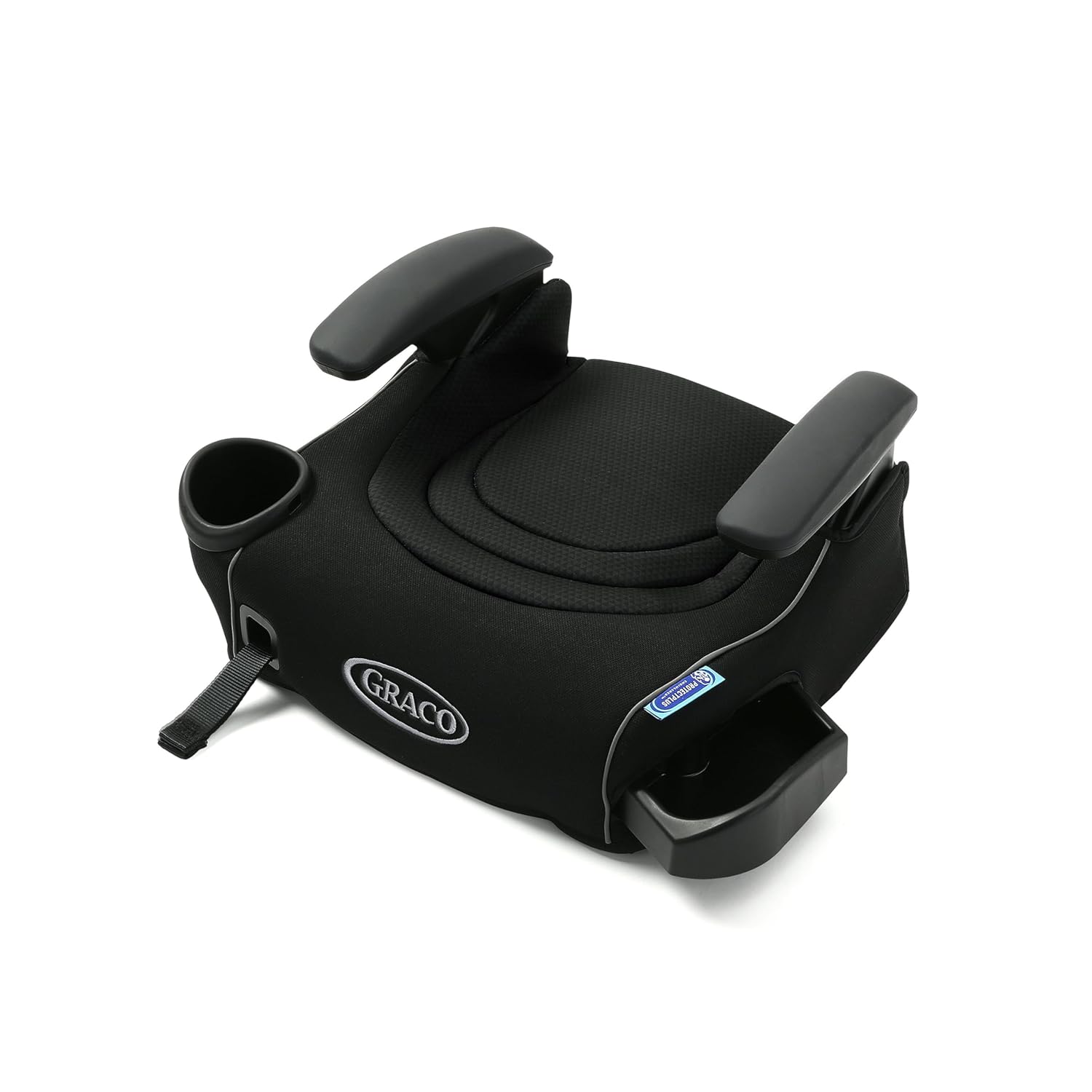
The Graco TurboBooster LX is a backless booster with front-adjust LATCH. Graco lists it for children from 40 to 100 pounds and 43 to 57 inches tall. The LATCH connection helps keep the booster secured to the vehicle when it is not occupied and can make self-buckling easier. :contentReference[oaicite:9]{index=9}
It also includes an integrated cup holder and hideaway storage compartment, making it a practical choice for everyday school runs, carpools, and family trips.
Why It Stands Out
- Front-adjust LATCH system
- 40-100 lb and 43-57 in stated range
- Lightweight 5.56 lb design
- Integrated cup holder and storage
- Machine-washable seat cushion
- Designed to help with proper seat belt positioning
Things To Consider
- It is a backless booster and does not provide back or head support.
- Vehicle head restraint compatibility still matters.
- Check the child’s size against the current manufacturer requirements.
5. Diono Solana Backless Booster Seat 2-Pack
Best for: Families who need two lightweight boosters

The Diono Solana is a lightweight backless belt-positioning booster designed for children who are ready for this type of seat. The current Solana 2 product line is listed by Diono for children weighing 40 to 120 pounds and measuring 38 to 63 inches tall. :contentReference[oaicite:10]{index=10}
The two-pack can make sense for families with multiple vehicles or more than one booster-age child. The seat has contoured padding, machine-washable covers, cup holders, and a shoulder belt positioner designed to help with belt placement.
Why It Stands Out
- Available as a two-pack
- 40-120 lb stated weight range for the Solana 2
- Lightweight backless design
- Machine-washable cover
- Built-in cup holders
- Shoulder belt positioner
- Easy to move between vehicles
Things To Consider
- Backless design requires an appropriate vehicle head restraint or high seat back.
- The two-pack is only useful if you actually need two boosters.
- Always confirm the exact Solana version because LATCH availability differs between models.
How To Choose The Right Booster For Your 5 Year Old
Instead of choosing based only on brand or price, start with your child’s current size and your vehicle.
- Choose a high-back booster if your child benefits from additional positioning support or your vehicle setup makes a high-back model more appropriate.
- Choose a backless booster when your child is ready for that style and your vehicle has a suitable head restraint or high seat back.
- Choose a 2-in-1 model if you want the flexibility to use a high-back configuration first and potentially move to backless later.
- Choose a LATCH model if keeping the booster secured when it is unoccupied is important to you and the model is compatible with your vehicle.
- Choose a lightweight model if you regularly move the booster between vehicles.
How To Check If The Seat Belt Fits Correctly
A booster only does its job when the vehicle seat belt is positioned correctly. NHTSA recommends checking that the lap belt lies snugly across the child’s upper thighs rather than the stomach. The shoulder belt should rest across the chest and shoulder rather than crossing the neck or face. :contentReference[oaicite:11]{index=11}
- The child’s back should remain against the vehicle seat or booster as designed.
- The lap belt should sit low across the upper thighs.
- The shoulder belt should cross the chest and shoulder.
- The shoulder belt should not sit against the neck or face.
- Your child should be able to stay in this position for the entire trip.
- Check the belt fit again as your child grows.
Common Booster Seat Mistakes To Avoid
- Moving to a booster too early: Turning 5 does not automatically mean a child is ready.
- Ignoring the current car seat limits: Follow the height and weight limits printed by the manufacturer.
- Using a backless booster without proper vehicle support: Backless boosters require an appropriate head restraint or high seat back.
- Allowing the shoulder belt behind the back: The shoulder belt should remain across the chest and shoulder.
- Ignoring vehicle compatibility: Check both the booster manual and vehicle owner’s manual.
- Buying based only on age: Height, weight, maturity, belt fit, and vehicle compatibility all matter.
- Skipping the manual: Installation and belt-routing instructions vary between booster models.
Can A 5 Year Old Use A Backless Booster?
Possibly, but age alone should not determine the answer. Your child needs to meet the specific booster manufacturer’s requirements and be mature enough to stay properly positioned throughout the ride.
You also need to consider the vehicle. NHTSA says a backless booster should only be used in a vehicle with head restraints or a high seat back because the booster itself does not provide head and neck support. :contentReference[oaicite:12]{index=12}
Do You Need LATCH With A Booster Seat?
Not every booster uses LATCH. Some models include lower-anchor connectors, while others are designed to be used without them. The important thing is to follow the instructions for your specific booster and vehicle.
For example, the Graco TurboBooster LX uses front-adjust LATCH, while the Graco TurboBooster 2.0 Backless model covered above does not include LATCH. LATCH can help keep compatible boosters secured when they are not occupied, but it does not replace the vehicle seat belt for securing the child. :contentReference[oaicite:13]{index=13}
When Should A Child Stop Using A Booster?
Do not stop using a booster simply because your child reaches a particular birthday. Continue using one until the vehicle seat belt fits correctly without it.
A properly fitting seat belt should sit low across the upper thighs and across the middle of the chest and shoulder. Many children do not reach the point where an adult seat belt fits correctly until they are around 4 feet 9 inches tall and between 8 and 12 years old, although individual children and vehicles differ. :contentReference[oaicite:14]{index=14}
Booster Seat Care And Maintenance
- Check the booster regularly for cracks, damage, or missing parts.
- Keep belt guides free of food, dirt, and debris.
- Clean the cover according to the manufacturer’s instructions.
- Do not use cleaning products that the manufacturer does not approve.
- Check the expiration or usable-life information for your specific model.
- Replace a booster after a crash if the manufacturer instructs you to do so.
- Keep the instruction manual available for future reference.
Frequently Asked Questions
What is the best booster seat for a 5 year old?
The best booster depends on whether your child is ready for a booster, their height and weight, and your vehicle. For a child who is ready, the Graco TurboBooster 2.0 Highback is a versatile 2-in-1 option, while the Chicco KidFit ClearTex Plus offers extensive adjustability. Backless models such as the Graco TurboBooster LX and Diono Solana are better suited to children and vehicles that meet their requirements.
Is 5 too young for a booster seat?
Not necessarily, but age alone is not enough. NHTSA recommends keeping a child in a forward-facing harnessed seat until they reach that seat’s maximum height or weight limits. A child also needs enough maturity to sit correctly in a booster for the entire ride. :contentReference[oaicite:15]{index=15}
Should a 5 year old use a high-back or backless booster?
A high-back booster can be a better fit when a child benefits from additional positioning support. A backless booster is lighter and easier to move, but the vehicle must have an appropriate head restraint or high seat back. The child’s maturity and belt fit are more important than choosing based on age alone.
What weight does a child need to be for a booster seat?
It depends on the specific booster. Many models start around 40 pounds, but minimum and maximum limits vary. For example, the Graco TurboBooster models covered here start at 40 pounds, while the Diono Solana 2 is also listed from 40 pounds. Always check the exact model’s current instructions before use. :contentReference[oaicite:16]{index=16}
Can a booster seat be used with a lap-only belt?
Most belt-positioning boosters are designed to work with a vehicle lap-and-shoulder belt. Do not assume a booster is compatible with a lap-only belt. Check the booster manufacturer’s instructions and your vehicle owner’s manual before use.
How long should a child use a booster seat?
Use a booster until the child is large and mature enough for the vehicle seat belt to fit correctly without the booster. This often happens between ages 8 and 12, but the correct belt fit matters more than a specific birthday. :contentReference[oaicite:17]{index=17}
Can a booster seat be used in the front seat?
Children should ride in the back seat. NHTSA recommends keeping children in the back seat at least through age 12. Follow your vehicle and booster manufacturer’s instructions as well as applicable local laws. :contentReference[oaicite:18]{index=18}
Final Thoughts
The best booster seat for a 5 year old is not necessarily the most expensive model or the one with the most features. The right choice starts with determining whether your child has actually outgrown their forward-facing harnessed seat and is mature enough to remain correctly positioned with a vehicle seat belt.
For families wanting a booster that can grow with their child, the Graco TurboBooster 2.0 Highback is a versatile option. The Chicco KidFit ClearTex Plus is worth considering if adjustability and easy cleaning are priorities. For families looking for a simpler backless design, the Graco TurboBooster LX and Diono Solana offer useful alternatives.
Before buying, check your child’s height and weight, read the booster manual, check your vehicle owner’s manual, and confirm that the lap-and-shoulder belt fits correctly. A proper fit matters more than the brand name or a long list of extra features.
Important: Child passenger safety recommendations and product specifications can change. Always follow the current instructions from the booster manufacturer, your vehicle manufacturer, NHTSA, and applicable local laws.

I’m Melissa Turner, a mom of two passionate about helping parents make confident buying decisions. I research and review baby gear, compare trusted products, and share practical parenting tips based on careful research. My goal is to simplify shopping with honest, easy-to-understand guides that put safety, comfort, and value first. I focus on baby carriers, strollers, feeding essentials, nursery products, and everyday parenting gear. I hope my recommendations help make your parenting journey a little easier and more enjoyable.