Bassinet vs Cradle: How to Choose the Right Bed for Your Baby
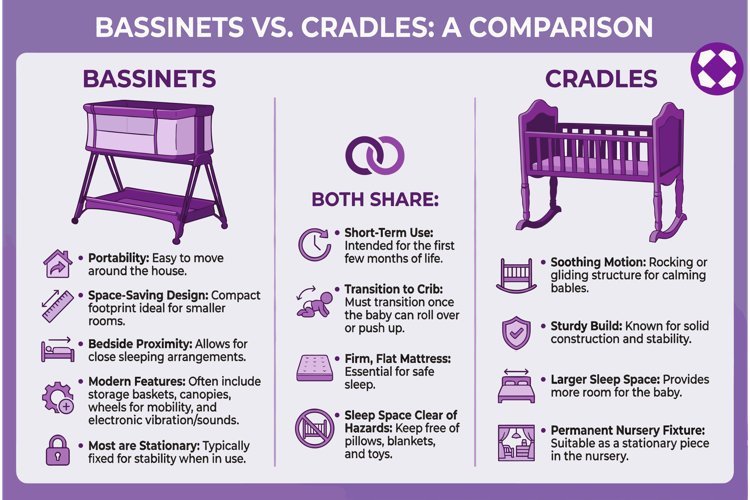
A bassinet is a small, portable bed designed for newborns up to about 4 or 5 months, while a cradle is a larger, stationary bed that often uses a rocking or gliding motion. You’ll find that bassinets are better for small rooms and bedside use, but cradles provide more space and a longer period of utility before your baby outgrows the sleeping area.
Comparing the design of a bassinet and cradle

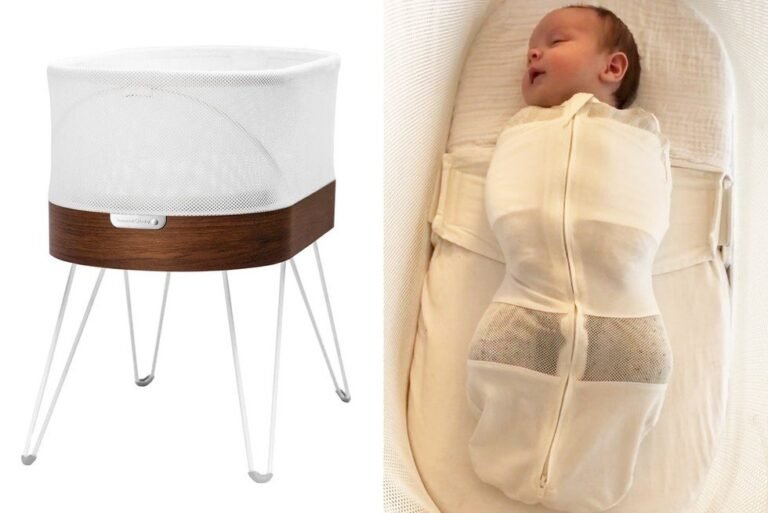
When you’re trying to choose between these two options, it’s helpful to look at how they function in your daily routine. Bassinets are typically lightweight, feature soft sides, and are often designed to be moved easily from room to room. Many models include a hood or canopy and can be adjusted to sit flush with your own bed, which makes nighttime feedings much faster.
If you have limited floor space or need to navigate narrow hallways, prioritize the bassinet. Its smaller footprint allows it to fit into tight corners where a wider cradle would become a tripping hazard.
Cradles are usually heavier and built with a frame that allows for a gentle rocking motion. Because they’re often larger, they can accommodate a growing infant for a few months longer than a standard bassinet. If you prioritize a piece of furniture that stays in one spot, a cradle offers a more traditional aesthetic and a stable base for your nursery setup.
Parents often make the mistake of choosing a cradle for its rocking feature without checking if the floor is perfectly level. On uneven hardwood or thick carpet, a cradle may tilt or stick, rendering the motion jerky rather than soothing. If your nursery has plush carpeting, stick to the bassinet to avoid stability issues.
| Feature | Bassinet | Cradle |
|---|---|---|
| Primary Motion | Usually stationary | Rocking or gliding |
| Portability | High | Low |
| Typical Size | Small (compact) | Medium (wider) |
| Usage Time | Up to 4-5 months | Up to 6-8 months |
| Design Style | Modern/fabric-focused | Traditional/wood-focused |
Is It Safe to Use These for Sleep?
Both types of sleeping furniture are safe provided they meet current federal safety standards. You should always look for a model that has a firm, flat mattress and mesh or breathable sides to ensure your baby gets enough airflow while sleeping. It’s important to remember that once your baby starts rolling over or pushing up on their hands and knees, you must stop using these beds immediately.
The most common mistake parents make is keeping a bassinet too long because the baby still fits physically. If your child can push up on their hands and knees, they’re strong enough to tip the unit or climb over the side. At this developmental milestone, transition them to a full-sized crib regardless of their weight.
Verify that the product hasn’t been recalled by searching the Consumer Product Safety Commission database. If the model lacks a clear manufacturing date or a visible model number, assume it’s non-compliant and avoid it. Never place soft bedding, pillows, or thick blankets inside the sleep space, as these items pose a significant risk of suffocation and SIDS.
Before purchasing, check the weight limit for your specific model. While some bassinets accommodate babies up to 20 pounds, smaller models are often rated only for 15 pounds. If your baby is nearing this threshold, they may be developmentally ready to roll over or push up, making the bassinet unsafe. When in doubt, a new product guarantees you’re working with the latest safety regulations.
How to Decide Which One Fits Your Home

Choosing the right option depends mostly on your living space and how often you need to move the bed. If you live in a smaller apartment or want the baby sleeping next to your bed for the first few months, a bassinet is the most efficient choice. Its small footprint allows you to fit it into tight corners where a larger cradle simply wouldn’t work.
If your bedroom door frame measures less than 30 inches wide, prioritize the bassinet. Many cradles are too wide to pass through standard doorways without being disassembled.
If you have a dedicated nursery and want a piece of furniture that will last longer, a cradle is often the better value. You’ll gain two to three extra months of use before needing to transition your baby to a full-sized crib.
Check the weight limit on the manufacturer’s label before buying. Most bassinets cap out at 15 pounds, while sturdier cradles can often hold up to 25 pounds. If your baby is in the 90th percentile for weight, a bassinet may become unsafe months earlier than expected. Choose the cradle if you prefer a longer-term investment.
Related guides
- Do Babies Wear Diapers in the Pool ?
- Best & Easy Way to Clean Baby Carrier
- Mesh Ring Sling 2026 | Best Baby Carrier
Frequently Asked Questions
Can I use a cradle as a permanent replacement for a crib?
No, a cradle isn’t a long-term replacement for a crib. Most babies outgrow them by the time they are 6 to 8 months old, at which point they will need the safety and height of a full-sized crib to prevent them from climbing or falling out.
Are there weight limits I need to watch for?
Yes, every model has a specific weight limit set by the manufacturer. Most bassinets cap out at 15 to 20 pounds, while some larger cradles can hold up to 25 or 30 pounds, so check the label carefully before you buy.
Does the rocking motion of a cradle help babies sleep?
It can help some babies settle, but it isn’t a guaranteed solution for every infant. While the gentle motion mimics the feeling of being held, you should ensure the locking mechanism is engaged if you prefer a stationary sleep environment for your baby.
Conclusion
Measure the exact floor space next to your bed and in your nursery before you commit to a purchase. If you’re limited on room, prioritize the smaller footprint of a bassinet to keep your path clear at night. Otherwise, select the sturdier option that best matches your home’s decor.
I’m Melissa Turner, a mom of two passionate about helping parents make confident buying decisions. I research and review baby gear, compare trusted products, and share practical parenting tips based on careful research. My goal is to simplify shopping with honest, easy-to-understand guides that put safety, comfort, and value first. I focus on baby carriers, strollers, feeding essentials, nursery products, and everyday parenting gear. I hope my recommendations help make your parenting journey a little easier and more enjoyable.