


Can Newborns Use a Ring Sling? Safe Babywearing Tips
Can Newborns Use A Ring Sling?
Yes, newborns can use a ring sling safely when you follow proper guidelines. As a mother who has carried all my babies from birth, I can say the ring sling is a gentle, practical, and comfortable tool for newborns. But you must learn correct positioning, safety checks, and age-appropriate carries. Let’s walk step-by-step through how to use a ring sling with your newborn, what mistakes to avoid, and how to make both you and your baby feel secure.
Why Choose A Ring Sling For Newborns?
Ring slings are popular for newborns because they offer:
- Quick adjustments: Easily tighten or loosen with the rings.
- Close contact: Baby feels your warmth and heartbeat.
- Versatility: Suitable for newborns and older babies.
- Compact size: Easy to pack in your diaper bag.
The ring sling supports the natural newborn position (curled, knees up, head close to you). With correct use, it helps calm fussy babies, supports bonding, and can even assist with breastfeeding.
Is A Ring Sling Safe For Newborns?
When used correctly, ring slings are safe for newborns. The most important rules are:
- Follow T.I.C.K.S. Safety guidelines (explained below).
- Use a sling made of strong, breathable fabric.
- Make sure the rings are certified and not damaged.
If you’re new to babywearing, take time to practice without your baby first, then with a doll or stuffed animal. Always check your sling for wear and tear before every use.
Understanding T.i.c.k.s. Babywearing Safety
Before you carry your newborn, remember T.I.C.K.S.:
- Tight: The sling should hug your baby firmly, with no loose fabric.
- In view at all times: You can always see your baby’s face.
- Close enough to kiss: Baby’s head is at your chin level.
- Keep chin off chest: There should be at least one finger’s space under your baby’s chin.
- Supported back: Baby’s back is straight, not slumped.
These rules help prevent dangerous positions, especially for tiny newborns who can’t control their head and neck yet.
Choosing The Right Ring Sling
Not all ring slings are equal. Look for:
- Strong aluminum rings (not plastic)
- Soft, breathable fabric (cotton, linen, bamboo)
- Length: Most are about 75–85 inches; shorter slings may not fit larger parents
- Safety tested brands: Check for reviews and certifications
Here’s a comparison of popular ring sling fabrics:
| Fabric Type | Breathability | Support | Ease of Cleaning |
|---|---|---|---|
| Cotton | High | Medium | Easy |
| Linen | Very High | High | Medium |
| Bamboo | High | Medium | Easy |
For newborns, cotton and linen slings are gentle and supportive. Avoid thick or rough fabrics, which may irritate sensitive skin.
How To Wear A Ring Sling: Step-by-step
Wearing a ring sling for the first time can be confusing. Follow these steps:
- Thread the sling: Place the rings on one shoulder, drape the fabric across your back, then bring the tail through both rings. Pull it back through the lower ring (like a belt).
- Spread fabric: Make sure it’s not twisted. The sling should cover your shoulder and fan out across your back.
- Tighten: Adjust the sling so the pocket (where baby will sit) is snug but not too tight.
Here’s a simple visual comparison:
| Step | What to Do | Why It’s Important |
|---|---|---|
| 1 | Thread fabric through rings | Creates secure seat |
| 2 | Spread fabric on shoulder/back | Distributes weight |
| 3 | Tighten sling | Prevents sagging |
How To Put Baby In A Ring Sling
For newborns, always use the front carry. Here’s how:
- Hold your baby upright against your chest, with their head close enough to kiss.
- Open the sling pocket: With your free hand, gently slide baby’s legs into the pocket.
- Support baby’s bottom and back: Spread the fabric from knee to knee, forming a deep seat.
- Check T.I.C.K.S. : Tighten the sling until baby is snug, with their back supported and chin off chest.
Comfort tips:
- Keep baby’s knees higher than their bottom (the “M” position)
- Check for any fabric covering baby’s face
- Adjust sling tail for a custom fit
Common mistakes:
- Sling too loose (baby slumps)
- Fabric twisted (creates pressure points)
- Baby too low (not close enough to kiss)

Credit: babytula.com
How To Do A Front Carry With A Ring Sling
The front carry is best for newborns and young infants. It supports their head, keeps them upright, and lets you monitor their breathing.
Steps:
- Wear the sling on your preferred shoulder (most moms choose non-dominant side).
- Thread and tighten as above.
- Place baby upright, tummy to tummy, inside the sling.
- Spread fabric wide under baby’s bottom and thighs.
- Tighten until snug, using the tail.
Age advice: Use this carry from birth until about 4 months, or until baby has good head control.
Extra tips:
- For smaller babies, use the “heart-to-heart” position: Baby’s head rests over your heart.
- In winter, check for overheating by feeling baby’s back and neck.
How To Do A Hip Carry With A Ring Sling
The hip carry is popular for older babies who can hold their head up (around 4–6 months). For newborns, this carry is not recommended.
Why?
- Newborns lack neck strength
- Hip carry can cause slumping
Steps (for older babies):
- Place sling on your shoulder and tighten.
- Position baby on your hip, facing you.
- Slide baby’s legs into the sling, spread fabric from knee to knee.
- Tighten for support.
Age advice: Wait until baby has strong head and trunk control (usually 4–6 months).
How To Breastfeed In A Ring Sling
Breastfeeding in a ring sling takes practice, but it’s helpful for feeding discreetly and hands-free. Only try this once you’re confident with regular carries.
How to breastfeed in a ring sling:
- Start with a front carry, baby upright.
- Loosen the sling tail slightly, lower baby to breast height.
- Support baby’s head with your arm or hand.
- After feeding, retighten and reposition baby upright.
Safety tips:
- Always return baby to upright position after feeding.
- Monitor baby’s breathing during feeding.
- Never let baby’s chin rest on their chest.
Common mistakes:
- Baby too low or lying flat (risk of suffocation)
- Sling too loose (lack of support)
- Not checking baby’s face regularly
Newborn Positioning: What Matters Most
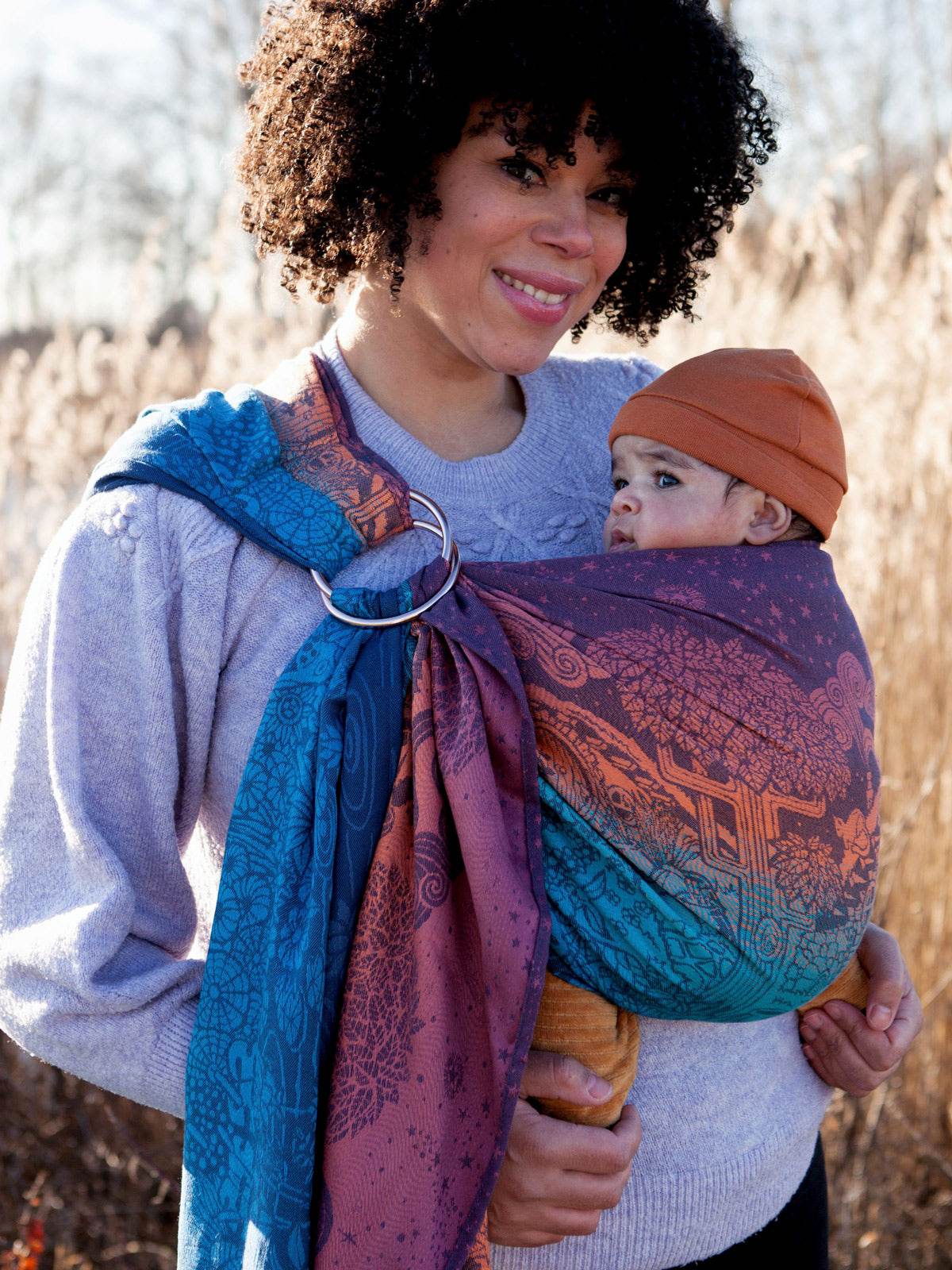
Newborns need special care in a ring sling. The ideal position is:
- Upright, chest to chest
- Legs tucked in “M” shape, knees higher than bottom
- Head supported by fabric, never pressed forward
- Face visible at all times
Signs of good positioning:
- Back is straight (not slumped)
- Baby feels snug, not loose
- You can kiss their head easily
If you notice your baby slumping, struggling to breathe, or not looking comfortable, take them out and re-position.
Credit: oschaslings.com
Age-specific Advice For Ring Sling Use
Newborn (0–3 months):
- Only use front carry
- Double-check all safety rules
- Limit carrying time to 1–2 hours at a stretch
Infant (4–6 months):
- Try hip carry if baby has head control
- Continue monitoring for slumping
Older baby (6+ months):
- Hip carry is more comfortable for you and baby
- Can use sling for longer periods
Practical tip: Babies grow fast! Adjust the sling as your child gets heavier and taller. Always check ring and fabric integrity.
Comfort Tips For Parents
Ring slings can feel awkward at first. Here’s how to make it easier:
- Practice without baby: Use a stuffed animal to learn threading and tightening.
- Switch shoulders: If one shoulder feels sore, alternate sides.
- Keep fabric wide: Spread sling across your shoulder and back for better support.
- Dress for comfort: Avoid slippery fabrics or tops that bunch up.
If you’re new, ask a local babywearing group for help. Many communities have trained educators who offer free advice.

Credit: www.youtube.com
Common Mistakes Beginners Make
Many new parents worry about making mistakes. Here are the ones I see most often:
- Sling too loose: Causes slumping, unsafe breathing.
- Baby too low: Should always be close enough to kiss.
- Fabric twisted: Can create pressure points and discomfort.
- Not checking rings: Loose or damaged rings are dangerous.
- Ignoring T.I.C.K.S. : All five steps are essential, every time.
If you’re unsure, stop and check. It’s better to take a few extra minutes than risk unsafe positioning.
Real-life Example: My First Ring Sling Carry
When I had my first baby, I was nervous. The sling felt strange, and I worried about every adjustment. But after two weeks of practice and watching videos, I felt confident. My baby calmed down quickly in the sling, and I could do chores with both hands free.
The most important lesson? Always check your baby’s position. If something feels wrong, trust your instincts and try again.
Expert Support And Resources
If you want more help, visit CDC Babywearing Safety for trusted advice. You can also find local babywearing groups online, many of which offer free classes or meetups.
Key Takeaways
- Newborns can use a ring sling safely when you follow T.I.C.K.S. Guidelines.
- Always use the front carry for newborns. Hip carry is for older babies.
- Proper positioning is critical: Upright, close enough to kiss, chin off chest.
- Practice threading and adjusting the sling without baby first.
- Breastfeeding in a ring sling is possible with careful support and upright repositioning.
- Watch out for common mistakes: Loose sling, twisted fabric, ignoring safety checks.
- Seek expert help if you need reassurance—babywearing communities are welcoming and supportive.
The ring sling is a wonderful tool for bonding, comfort, and convenience. With a little practice, you’ll soon feel confident carrying your newborn safely and securely.
I’m Melissa Turner, a mom of two passionate about helping parents make confident buying decisions. I research and review baby gear, compare trusted products, and share practical parenting tips based on careful research. My goal is to simplify shopping with honest, easy-to-understand guides that put safety, comfort, and value first. I focus on baby carriers, strollers, feeding essentials, nursery products, and everyday parenting gear. I hope my recommendations help make your parenting journey a little easier and more enjoyable.


