
Best Bassinet Features for Your Baby: A Safety Guide
The best bassinet features are a firm, flat sleeping surface, breathable mesh sides, and a sturdy, stable base that stays level on your floor. These elements ensure your baby stays safe while they sleep, and they help you keep a close eye on your newborn during the night.
Key bassinet features to look for

Every parent wants to pick the right equipment for their nursery. This table compares the most important parts to look for when you’re shopping for a new place for your baby to rest.
| Bassinet Feature | Primary Purpose | Real-World Example |
|---|---|---|
| Breathable Mesh Sides | Better airflow and visibility | See-through side panels |
| Adjustable Height Legs | Fits your bedside perfectly | Telescopic metal legs |
| Firm Mattress Pad | Proper support for infants | Thin, stiff foam insert |
| Locking Wheels | Easy room-to-room movement | Caster wheels with locks |
| Drop-Down Side Wall | Quick access for feeding | Retractable side railing |
Breathable mesh sides for airflow
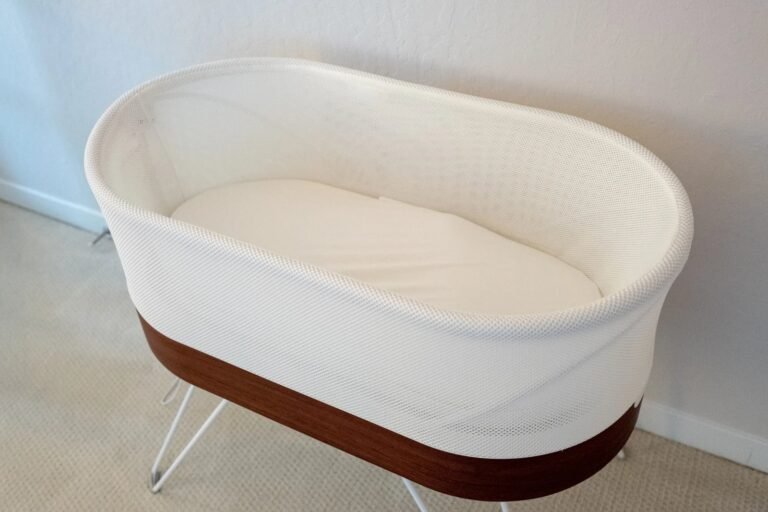
Breathable mesh sides are the most important safety element because they allow air to circulate freely around your baby. If you choose a model with solid plastic or thick fabric walls, you risk trapping heat or blocking airflow.
Look for sides made entirely of mesh that feel firm and don’t sag when touched. This feature also lets you see your infant clearly without having to stand up or lean over the unit. Check that the mesh is securely attached to the frame to prevent gaps.
Adjustable height for bedside access
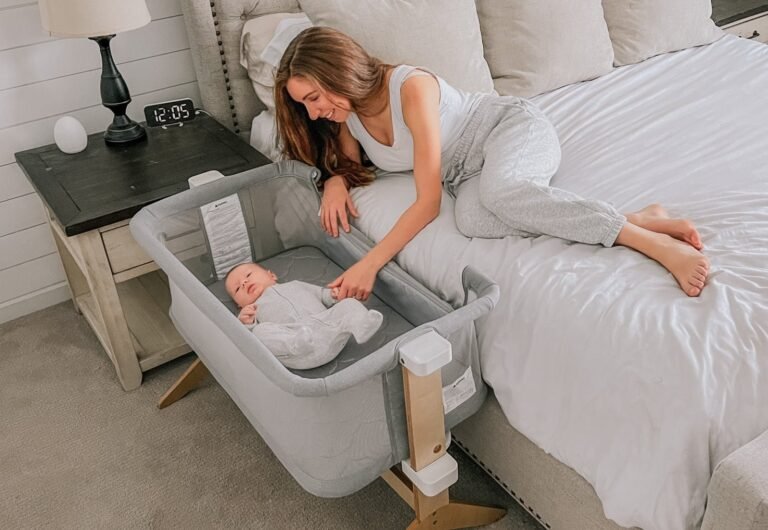
An adjustable height frame lets you align the mattress perfectly with the top of your own bed. Most models use a sliding mechanism or a series of notches to lock the height in place. If your bed is higher than the bassinet’s maximum height, you must look for a unit with extended leg range. Never use a bassinet that sits lower than your mattress if you want to reach your baby easily while lying down.
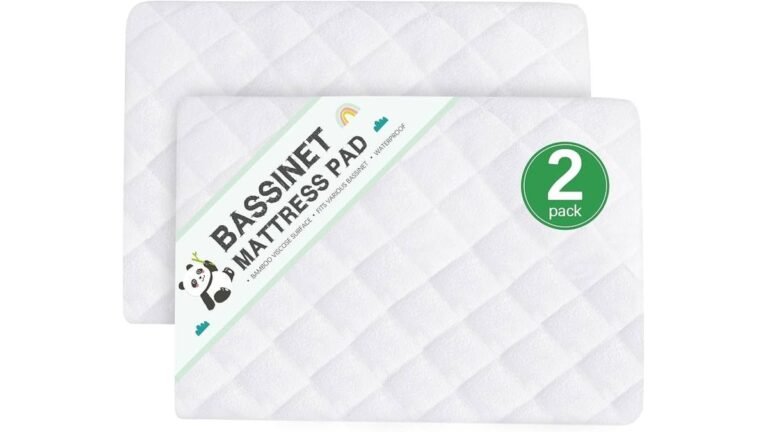
Firm mattress pad for safe sleep
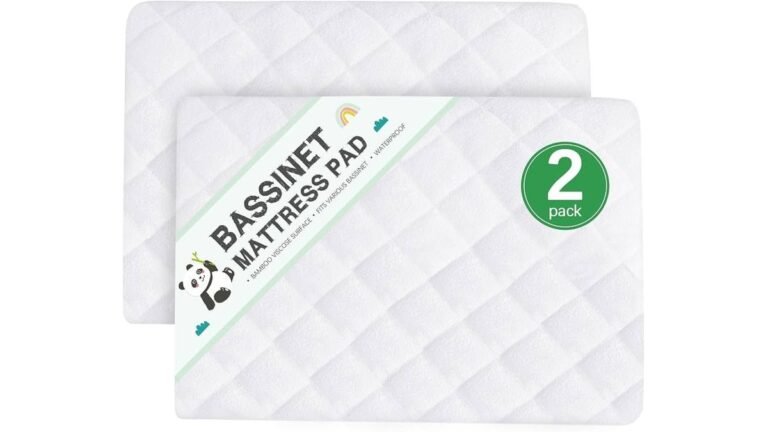
A firm mattress pad is essential for infant safety, as soft surfaces increase the risk of suffocation. The Consumer Product Safety Commission mandates that sleep surfaces for infants must be flat and rigid to prevent the baby from rolling into a dangerous position. Ensure the pad fits tightly against all sides of the frame with no gaps larger than two fingers. If you can push your finger between the mattress and the wall, the fit is too loose.
Locking wheels for mobility

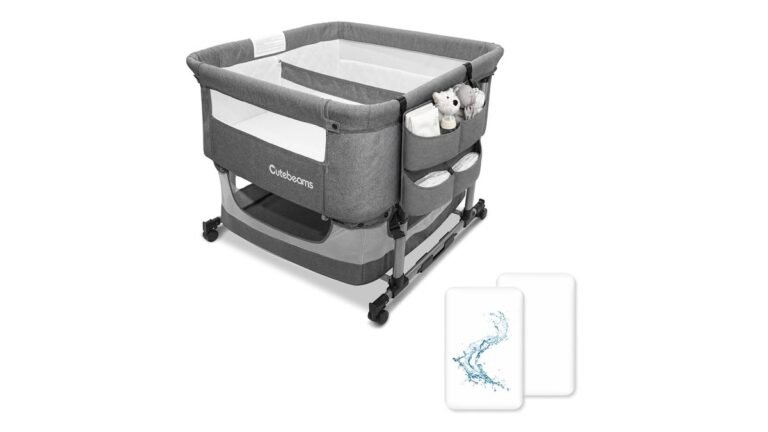
Locking wheels allow you to move the unit while keeping it stationary. If you have hardwood floors, look for rubberized wheels that don’t scratch the surface or make noise when you roll them. Always engage the locks the moment you reach your destination to prevent the unit from sliding if bumped.
Drop-down side walls for parents
A drop-down side wall allows you to open one side of the bassinet to reach your baby without lifting them over a high rail. Ensure the mechanism has a double-lock system to prevent accidental release. You should test the latching mechanism at least once a week to ensure it stays tight.
Additional useful bassinet components
- Storage Pockets: These hang on the side of the frame and help you keep diapers or wipes within reach during late-night changes.
- Detachable Canopy: This shields your baby from bright lights or ceiling fans, which is useful if you can’t dim the room completely.
- Travel Carry Bag: A lightweight bag makes it easier to transport the unit if you visit family and want your baby to sleep in a familiar space.
Choosing the right bassinet for your home

Deciding which features you need depends on your specific living space and your physical needs. If you have a high bed, prioritize models with a wide range of height adjustments. If you move often, choose a lightweight unit with locking wheels. If you’re worried about ventilation, stick strictly to mesh designs.
Related guides
- How to Choose the Right Car Seat Mirror For Your Baby Safety
- Top Picks for Parent Reviews of Baby Stroller Safety & Comfort
- Top Parent Reviews of Baby Carrier | Picks for Comfort & Safety
Frequently asked questions
How long can a baby use a bassinet?
Most babies outgrow a bassinet by 4 to 6 months of age, or as soon as they start pushing up on their hands and knees. Check your specific manual for the weight limit, which is typically 15 to 20 pounds.
Is it safe to use a used bassinet?
It’s safe if the unit meets current federal safety standards and has no broken, loose, or missing parts. You must verify that the mattress fits snugly and the frame has no recalls through the official government safety database.
Why do some bassinets have a weight limit?
The weight limit exists because the structural integrity of the base and the attachment points for the mattress can fail under heavier loads. Never place a child in the unit once they exceed the manufacturer’s maximum weight rating.
Do I need a waterproof mattress cover?
A waterproof cover is useful because it protects the pad from leaks and spills, making it easier to keep the sleeping area clean. Ensure the cover is thin and fits tightly so it doesn’t create a soft, uneven surface.
How often should I clean the fabric?
You should clean the fabric as soon as it becomes soiled, though the frequency depends on use; always consult the owner’s manual for the manufacturer’s recommended maintenance schedule. Always follow the specific washing instructions on the label to avoid shrinking the material or damaging the mesh.
What happens if the mattress is too soft?
A soft mattress increases the risk of SIDS because it can contour to the baby’s face and block their airway. Always test the firmness by pressing your hand in the center; it shouldn’t depress more than an inch.
Conclusion
Start by placing the unit on a flat, level surface away from any windows or electrical cords. You can expect the baby to sleep more soundly when they’re close to you in a secure space. If the frame begins to tilt or the floor becomes uneven, stop using it immediately and contact the manufacturer for repair guidance.

I’m Melissa Turner, a mom of two passionate about helping parents make confident buying decisions. I research and review baby gear, compare trusted products, and share practical parenting tips based on careful research. My goal is to simplify shopping with honest, easy-to-understand guides that put safety, comfort, and value first. I focus on baby carriers, strollers, feeding essentials, nursery products, and everyday parenting gear. I hope my recommendations help make your parenting journey a little easier and more enjoyable.